

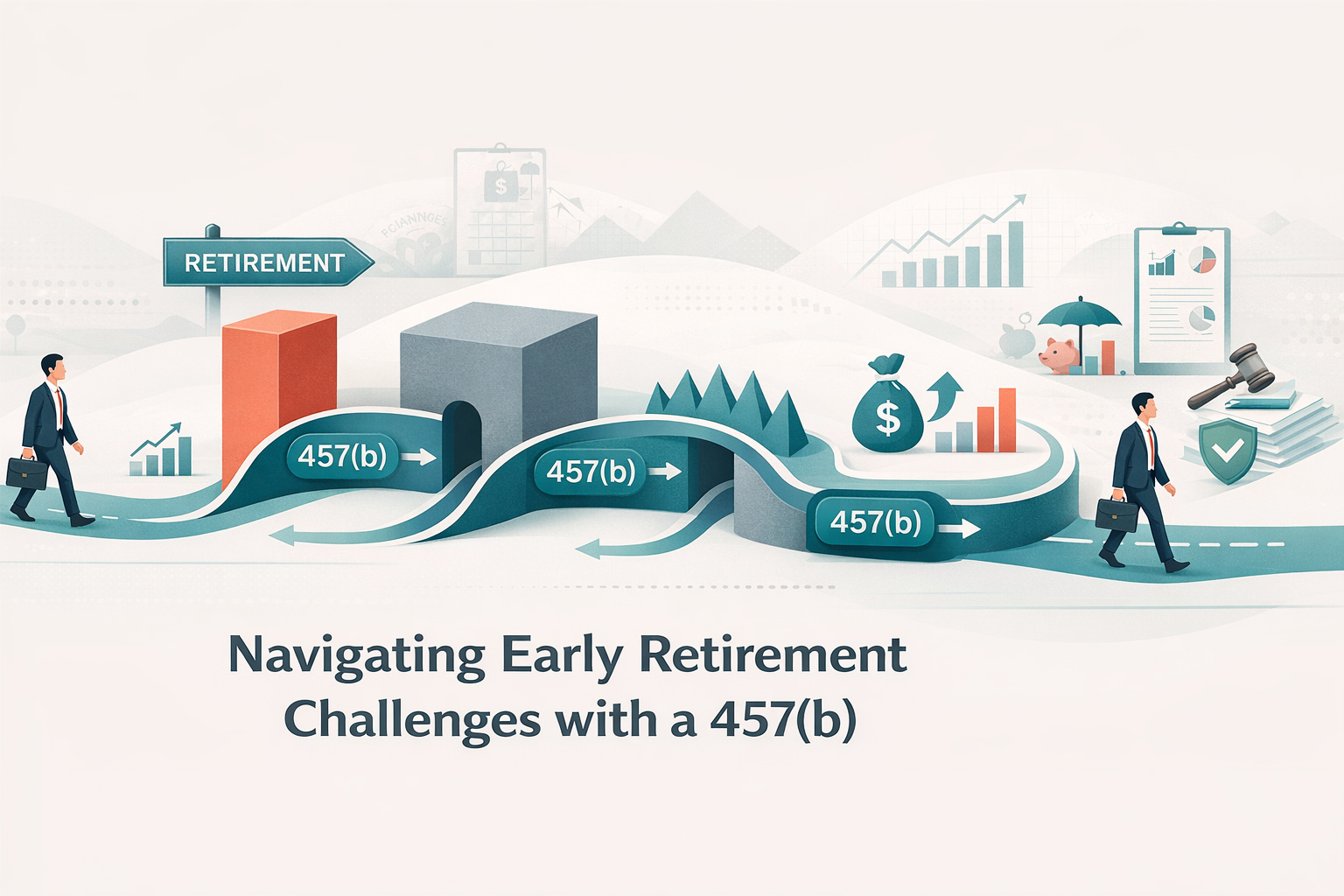
Introduction
Being forced into early retirement is one of the most difficult financial challenges a professional can face. Whether it’s due to corporate downsizing, restructuring, health concerns, or unexpected job loss, leaving the workforce earlier than planned can feel overwhelming. The good news: if you are part of the New York Power Authority (NYPA), your retirement benefits — particularly the governmental 457(b) deferred compensation plan — offer flexible ways to bridge the income gap without facing harsh penalties.
In this guide, we’ll break down:
● When you can withdraw from a 457(b) plan without penalty
● How NYPA’s pension and 457(b) plan work together
● Tax rules and rollover options (Vanguard, Fidelity, VOYA, Prudential, etc.)
● Strategies to protect your retirement savings if you’ve been forced to stop working early
Understanding the 457(b) Advantage in Early Retirement
The 457(b) deferred compensation plan is unique compared to 401(k) and 403(b) plans. One of the biggest advantages of a 457(b) is that you can take penalty-free withdrawals as soon as you separate from service, regardless of age. This means if you’re forced into early retirement at 52, you don’t need to wait until 59 ½ to access your money — a key benefit for NYPA employees.
Key Features of the NYPA 457(b) Plan:
● Penalty-free early access: Withdrawals after separation are not subject to the 10% IRS penalty.
● Multiple investment options: VOYA, Vanguard, Fidelity, Prudential, and others.
● Annual contribution limits: $23,000 in 2025 (plus catch-up contributions if over 50).
● Catch-up provisions: If you’re within three years of retirement, you may be able to contribute even more.
Pension + 457(b) = A Safety Net for Forced Retirees
NYPA employees may qualify for pension benefits depending on service years. But if you’re pushed into early retirement, your pension may not be enough to cover expenses until full Social Security eligibility. That’s where the 457(b) deferred compensation plan fills the gap.
Example Scenario
● Age 55, 25 years at NYPA
● Pension: $2,000/month
● 457(b) balance: $350,000
● Withdrawal strategy: $3,000/month from the 457(b) until age 62, then reduce withdrawals when Social Security begins.
Tax Rules and Withdrawal Options
Withdrawals from a 457(b) are taxable as ordinary income. NYPA employees should also plan for state tax on 457 withdrawals, especially if retiring in New York, where state income tax applies.
Rollover Options:
● 457(b) to IRA rollover (traditional or Roth)
● 457(b) to Vanguard, Fidelity, or Prudential accounts
● 457(b) to Roth IRA (taxable rollover but may reduce long-term RMD exposure)
Protecting Your Savings During Involuntary Retirement
1. Budget tightly: Use a 457(b) withdrawal calculator to model different income strategies.
2. Delay Social Security: Rely on your 457(b) and pension first to maximize benefits later.
3. Consider part-time work: This can reduce the drawdown rate on your 457(b).
4. Minimize taxes: Strategically roll over portions into Roth accounts if possible.
FAQs for Forced Early Retirement
When can I withdraw from a 457(b) without penalty?
As soon as you leave NYPA employment — even if you’re younger than 59 ½.
What are the annual 457(b) contribution limits?
$23,000 in 2025, plus an additional $7,500 if you’re 50 or older.
What happens if I roll my 457(b) into an IRA?
You may lose the penalty-free early withdrawal flexibility, since IRA withdrawals before 59 ½ typically trigger penalties.
Does NYPA match 457(b) contributions?
Check your plan specifics — most governmental 457(b) plans are funded by employee contributions only.
What if I need a lump sum right away?
You can take a full distribution, but spreading withdrawals over several years may reduce taxes.