
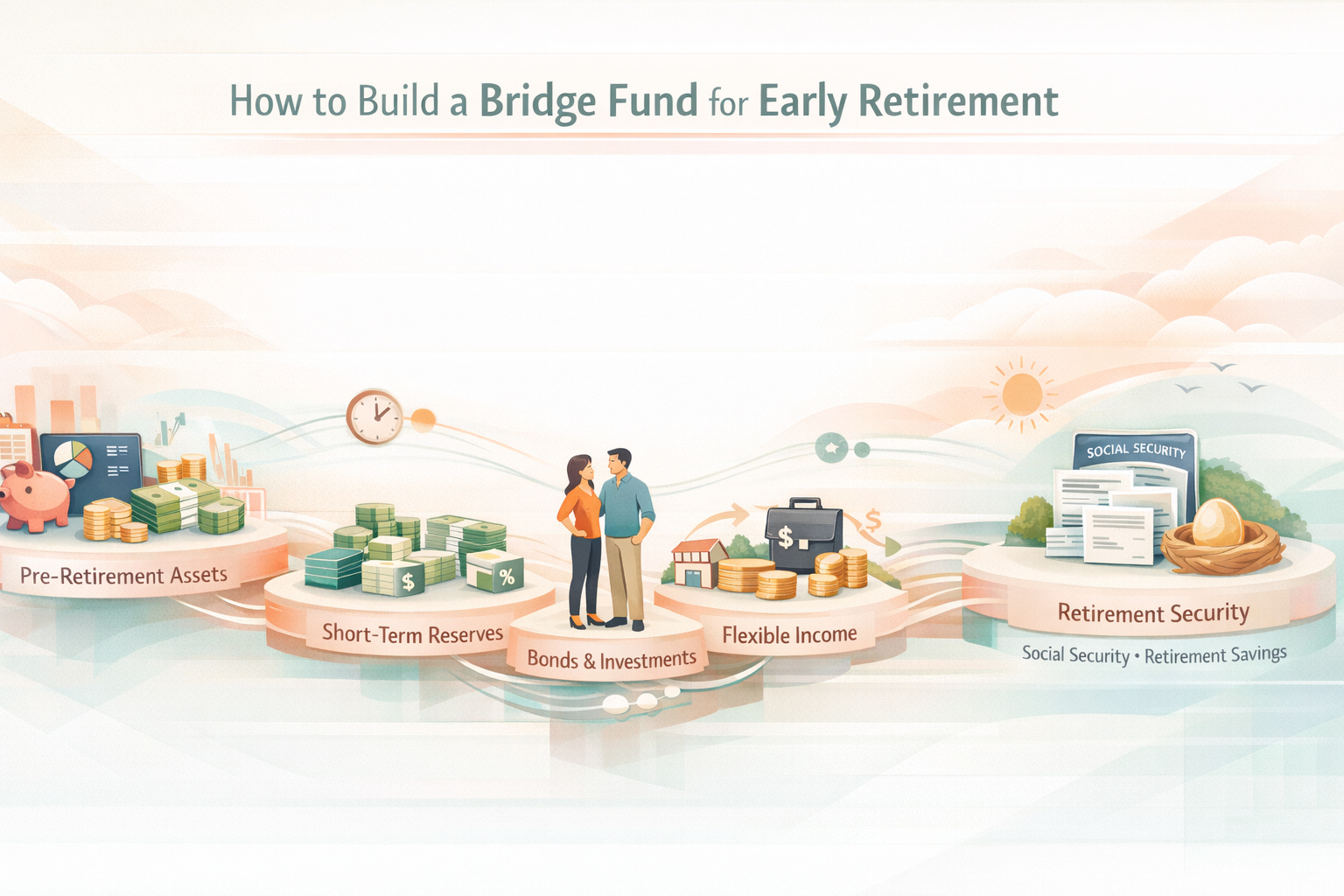
Early retirement sounds like freedom — no more meetings, no more commute, more time to focus on what matters. But between the day you leave work and the day Social Security, Medicare, and penalty-free withdrawals from retirement accounts kick in, there can be a big financial gap.
That’s where a bridge fund comes in. A bridge fund is money set aside specifically to cover living expenses during the “gap years” before you hit those milestones. Done right, it can keep you financially secure while preserving your long-term investments.
Step 1: Decide How Big Your Bridge Needs to Be
A bridge fund starts with a clear dollar target.
● Calculate Your Annual Gap Needs — Add up the total yearly expenses you’ll face in early retirement, including housing, utilities, groceries, transportation, health insurance, and taxes. If you plan to travel more or relocate, adjust for those changes.
● Count the Years Until Milestones — If you’re retiring at 58, you’ll have 7 years until Medicare (65), 4 years until you can access retirement accounts without penalties (59½), and potentially even longer until full Social Security benefits.
● Add a Cushion — Life has a way of throwing curveballs. Build in a 10–20% buffer so inflation, market downturns, or emergencies don’t derail your plan.
Step 2: Choose the Right Accounts for Accessibility The key to a bridge fund is having money you can access without penalties or excessive taxes.
● Taxable Brokerage Accounts — Flexible, penalty-free, and potentially tax-efficient if you use long-term capital gains. A great first line of funding for the gap years.
● Cash Reserves & CDs — Keeping 1–2 years of expenses in safe, liquid assets ensures you can ride out market dips without selling investments at a loss.
● Roth IRA Contributions — You can withdraw your contributions (not earnings) at any time without taxes or penalties, making Roths a powerful backup funding source.
● Rule of 55 — If you separate from your employer after age 55, you can withdraw from that employer’s 401(k) penalty-free — a lesser-known but valuable bridge option.
Step 3: Build It in Layers for Stability
A good bridge fund isn’t just one pot of money — it’s a layered strategy that balances growth and safety.
● Short-Term Layer — Cash savings, money market funds, or short-term CDs for the first 1–2 years of expenses. This gives you stability and liquidity.
● Medium-Term Layer — Conservative investments like bonds or bond ETFs that can provide modest returns while preserving capital for years 3–5.
● Long-Term Layer — Growth investments such as index funds or dividend stocks to keep pace with inflation for gap years further out.
Step 4: Supplement with Flexible Income Streams
Sometimes the best bridge fund isn’t entirely from savings.
● Part-Time Work — Consulting, freelancing, or seasonal jobs can generate income without locking you into a full-time schedule.
● Rental Income — A single well-chosen rental property can provide steady cash flow, but remember to budget for vacancies and repairs.
● Online or Business Ventures — Monetizing a skill, hobby, or small side business can add income and purpose during early retirement.
Step 5: Manage Taxes Strategically
Tax planning can make your bridge fund last significantly longer.
● Withdraw from Taxable Accounts First — This preserves your tax-advantaged accounts for later and allows you to control taxable income.
● Use Low-Income Years for Roth Conversions — Converting some traditional IRA or 401(k) money into a Roth during your gap years can reduce future RMDs and taxes.
● Harvest Capital Gains — In low-income years, you might qualify for the 0% long-term capital gains rate, letting you sell investments and pay little or no tax.
Step 6: Protect Against Sequence of Returns Risk
If your bridge fund is heavily invested, a market downturn early in retirement can do lasting damage.
● Keep at least 2 years of expenses in safe, liquid assets.
● Use a “bucket strategy” to avoid selling long-term investments during market drops.
● Review allocations annually and rebalance as needed to maintain your risk comfort level.
Step 7: Review and Adjust Every Year
Your bridge fund isn’t “set it and forget it.”
● Track your actual spending and compare it to your plan.
● Adjust for inflation, market performance, and unexpected expenses.
● Reassess your withdrawal sequence to minimize taxes and preserve growth.
Bottom Line
A well-built bridge fund ensures your early retirement years are stable, flexible, and tax-smart. By combining multiple accessible funding sources, layering your investments, and supplementing with strategic income, you can confidently step away from work without jeopardizing your long-term retirement security.