
A 457(b) plan is a tax-advantaged retirement plan offered primarily to local government employees and certain nonprofit workers. Unlike a 401(k) or 403(b), the 457(b) has unique withdrawal rules, flexible distribution options, and its own set of plan contribution limits defined under IRC Section 457(b). Understanding how the annual limit works, when withdrawals can be made, and the tax implications can help participants align their retirement savings with long-term retirement goals.
What Is a 457(b) Plan?
A 457(b) is a type of plan classified as a deferred compensation arrangement. It allows employees of state and local governments, school districts, and specific nonprofits to set aside money from each paycheck into dedicated retirement accounts. Contributions reduce current taxable income, making them attractive to employees looking to save while lowering taxes.
Nonprofits offer some non-governmental 457(b) plans, though they follow different rollover and withdrawal rules compared to government-sponsored plans. For example, a non-governmental 457(b) rollover to an IRA has stricter conditions than a government plan.
457(b) Contribution Limits
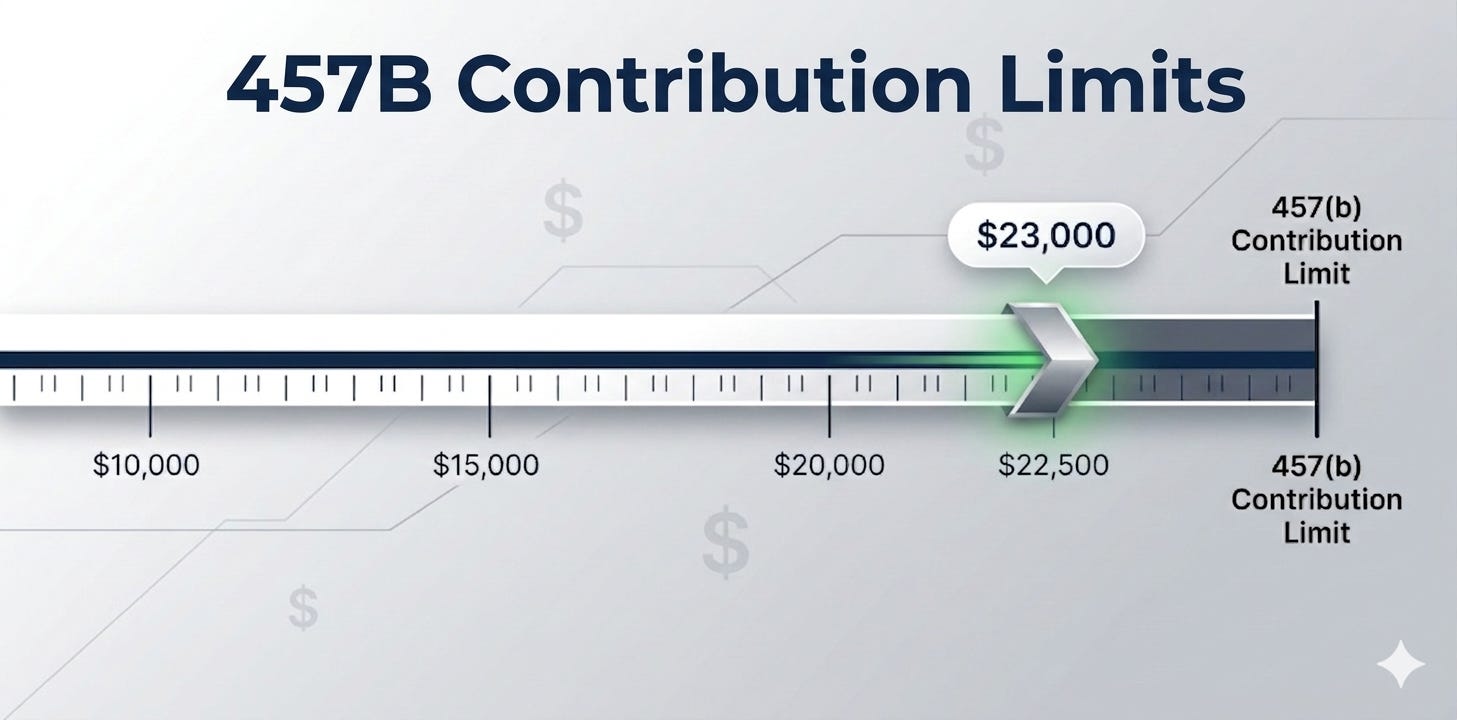
For 2025, the 457(b) contribution limits are aligned with inflation adjustments and IRS updates. The annual contribution limit is $23,000, matching the 401(k) elective deferral cap.
Key Points:
The maximum 457(b) contribution is $23,000 for employees under the normal retirement age.
Workers age 50 or older may contribute an additional $7,500 as a catch-up.
Under the special catch-up provision, participants within three years of retirement age may be allowed to contribute up to double the annual limit, provided they have underutilized contributions in prior years
This unique flexibility means employees nearing retirement can accelerate savings significantly compared to 401(k) or 403(b) participants.
401(k) and 457(b) Contribution Limits
A major advantage of the 457(b) is that its plan contribution limits are independent of 401(k) limits. This means participants who are eligible for both plans can contribute the maximum amount to each.
For example:
$23,000 to a 401(k)
$23,000 to a 457(b)
= $46,000 in combined deferrals, plus catch-up amounts.
This makes 457(b) plans especially powerful for local government workers and other employees with access to both types of plans.
Tax Treatment of 457(b) Contributions
Most section 457(b) contributions are made as pre-tax deferrals, reducing taxable income in the contribution year. Contributions grow tax-deferred, and distributions are taxed as regular income tax when withdrawn.
Key points on taxation:
● 457(b contributions tax deductible: Yes, they reduce current taxes.
● Roth contributions: Some plans allow a Roth account feature, where contributions are after-tax, but withdrawals in retirement are tax-free.
● Employer contributions: May be offered by certain plans, but must be included in the overall annual limit.
A financial advisor or plan administrator can provide tax advice tailored to your individual situation.
Withdrawal Rules and Penalties
The withdrawal rules for 457(b) plans are more flexible compared to other retirement accounts.
When can I withdraw from 457(b) without penalty? Withdrawals are allowed once you leave your employer, regardless of age, with no early withdrawal penalty.
This makes 457(b) plans unique, as 401(k) and 403(b) withdrawals before age 59½ normally incur penalties.
Distributions are taxed as ordinary income and must follow the plan’s rules for timing and frequency.
However, if you remain employed, withdrawals are generally not permitted unless your plan allows for small lump sums or hardship distributions.
Required Minimum Distributions (RMDs)
Like other tax-deferred accounts, 457(b minimum distribution requirements apply. Starting at age 73, retirees must begin required minimum distributions (RMDs).
Minimum distribution amounts are calculated based on life expectancy and account balance.
Failing to take RMDs results in additional tax penalties.
For Roth-designated 457(b) accounts, Roth contributions are not taxed at withdrawal, but RMDs still apply unless funds are rolled into a Roth IRA.
Checking the IRS website or consulting your plan documents provides additional information on RMD requirements.
Rollover Options
When leaving an employer, participants may have rollover options:
457(b to Roth IRA rollover: Allows conversion to a Roth IRA, but taxes are due on pre-tax amounts.
Non-governmental 457(b rollover to IRA: Only limited rollover options are permitted; consult the plan administrator.
Rollovers into other qualified plans, such as 401(k)s or 403(b)s, may be possible, depending on the plan’s rules.
Rollovers can help align retirement savings with broader retirement goals, especially when consolidating accounts for easier management.
Beneficiary and Inheritance Options
Like other retirement accounts, 457(b) plans allow you to name beneficiaries. 457(b beneficiary options include:
Spousal beneficiaries, who may roll assets into their own IRA.
Non-spouse beneficiaries who must follow the 10-year distribution rule under the SECURE Act.
These options are important for estate planning and coordinating with Social Security, pensions, and other benefits.
Advantages of a 457(b) Plan
Flexible withdrawal rules with no early withdrawal penalty after separation from service.
Higher contribution opportunities through special catch-ups.
Ability to combine with a 401(k) for higher total contribution limits.
Potential for both pre-tax and Roth contributions.
Valuable option for local government employees, employees of state, and nonprofit workers.
Things to Keep in Mind
Always verify details with your plan administrator, since each plan may impose additional restrictions.
Keep track of the contribution limit each year to avoid excess deferrals. ● Monitor current taxable income before executing a Roth conversion or rollover.
Remember that 457(b) plans are not covered by the Employee Retirement Income Security Act (ERISA) unless offered by nonprofits, so protections may differ.
Final Thoughts
The 457(b) contribution limits provide employees of local governments, schools, and nonprofits with a valuable way to enhance their retirement savings. By maximizing the annual contribution limit, adhering to the correct withdrawal rules, and planning early for required minimum distributions, participants can keep their retirement accounts aligned with their long-term retirement goals.
At RetireNova, we go beyond explaining the numbers; we help you apply them to your personal situation. Whether you’re considering a 457(b to Roth IRA rollover, comparing 401k and 457(b contribution limits, or reviewing beneficiary options, our advisors provide clear, practical guidance. With personalised strategies and professional tax advice, RetireNova ensures your plan works for your future.
Ready to maximize your retirement savings? Contact RetireNova today to start building a more predictable and sustainable retirement plan.