
Retirement planning in the United States is built around one of the most popular savings vehicles, the 401(k) contribution. Every year, the Internal Revenue Service (IRS) updates the rules, raising or adjusting the limits on 401(k) contributions to help workers and business owners save more, including participation in the federal government’s thrift savings plan. For 2025, as of now, the IRS has not yet announced any changes to the 401k contribution limits compared to 2024; these updates are typically released later in the year, so savers need to check for official IRS announcements as they become available.
For the 2025 tax year, the IRS has increased both employee and employer thresholds, giving savers more opportunities to build predictable retirement income. Whether you’re a full-time employee, a small business owner using a solo 401(k), or nearing retirement age, knowing the yearly 401(k contribution limit helps you make the most of your retirement plan.
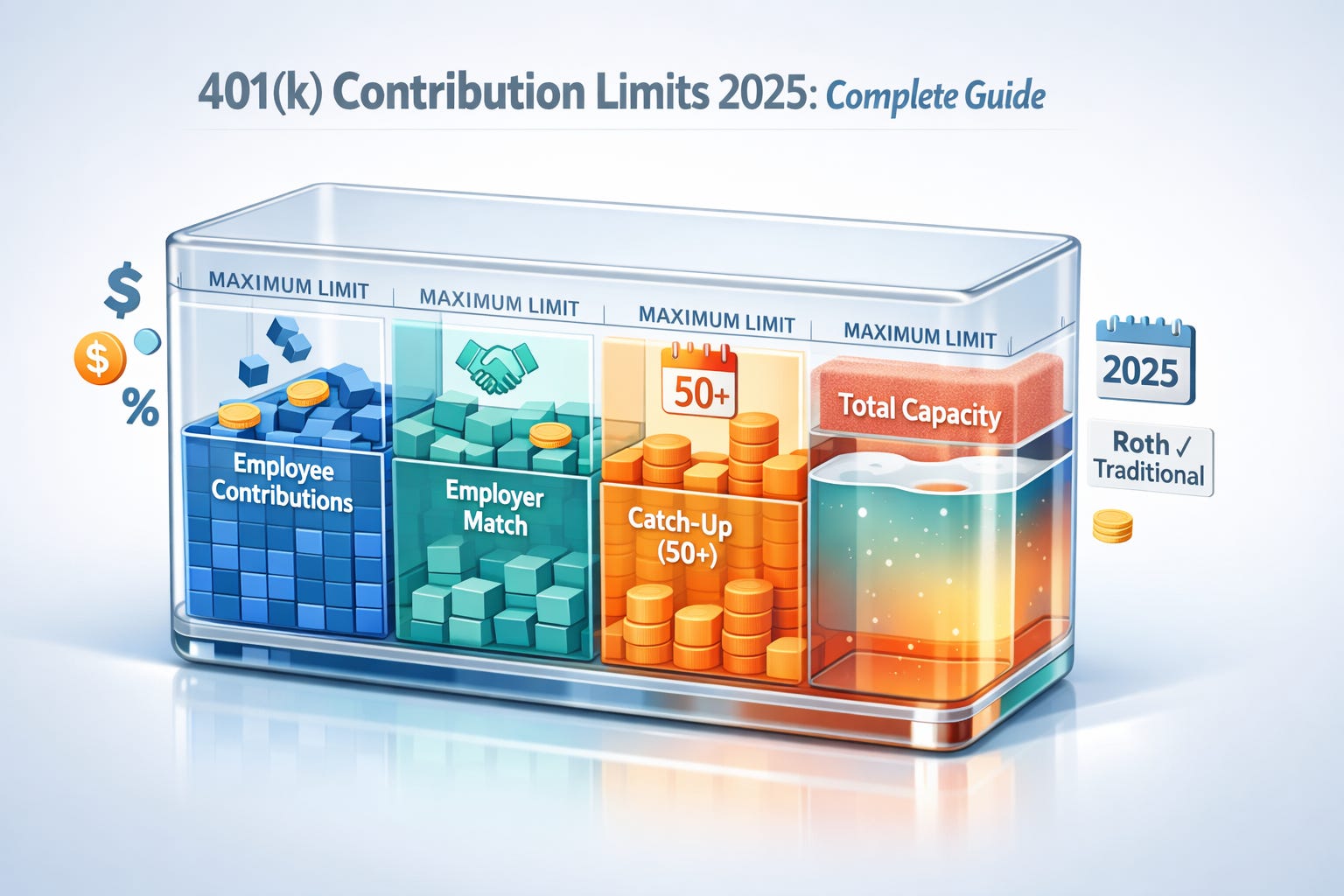
2025 401(k) Contribution Limits at a Glance
Here are the new figures for the calendar year 2025:
● Max annual 401(k) contribution (employee deferral limit): $23,000
● Catch-up contribution (age 50+): $7,500
● Total contribution limit (employee + employer): $69,000 ($76,500 if age 50+)
● Annual compensation limit: $345,000
These limits apply to both Traditional and Roth accounts. Staying within the IRS limit for 401(k contributions is essential to avoid penalties, especially if you are contributing across multiple plans.
Solo 401(k) Contribution Limits 2025
Self-employed individuals and small business owners can take advantage of the solo 401(k contribution rules. Unlike standard workplace plans, a solo 401(k) allows you to contribute in two roles:
1. As the employee: You can defer up to $23,000 (plus $7,500 catch-up if over 50).
2. As the employer: You can contribute up to 25% of net business earnings.
Combined, your solo 401(k contribution limits can reach the same $69,000 cap ($76,500 if 50+).
Using a solo 401k contribution calculator or an individual 401k contribution calculator can help you determine how much you’re eligible to contribute based on your income.
Roth Contributions and Tax Considerations
Both Traditional and Roth contributions fall under the same deferral cap of $23,000. However, tax treatment differs:
● Traditional 401(k): Contributions lower your taxable income in the current year.
● Roth 401(k): Contributions are made after-tax, but withdrawals in retirement are tax-free.
Keep in mind that some states that tax 401k contributions may affect your overall strategy. While most states don’t impose additional levies, a few may apply state tax on 401k contributions, making tax diversification even more important in your long-term plan.
Catch-Up Contributions for 2025
If you’re over 50, you can make catch-up contributions at the end of the year of $7,500, bringing your total elective deferrals to $30,500 in 2025. This provision is designed to help those closer to retirement age bridge gaps in their retirement savings.
This is particularly useful for those who started saving late, experienced job changes, or are transitioning from pension plans to defined-contribution accounts.
Employer Matching and Total Contribution Caps
Employer contributions do not affect your employee contribution limit but do count toward the overall $69,000 cap. For example:
● You contribute $20,000
● Employer matches $10,000
● Your total contribution = $30,000 (well under the limit)
It’s always recommended to contribute enough to capture the full employer match. Missing out is like leaving free money on the table.
Excess Contributions and IRS Rules
If you accidentally go beyond the IRS excess 401k contribution threshold, you’ll need to withdraw the surplus by April 15, 2026, to avoid double taxation.
Many savers run into this issue when contributing to multiple 401(k) accounts from different employers. Using a plan administrator or tax professional can help you calculate max 401k (k) contribution and avoid penalties.
401(k) Contribution Limits by Year: Tracking Changes
The 401k contribution limits by year have steadily increased:
● 2023: $22,500
● 2024: $22,500 (with inflation adjustments)
● 2025: $23,000
Monitoring this growth helps savers forecast future opportunities and make recommended 401k contribution adjustments over time.
How Much Should You Contribute?
The recommended 401k contribution depends on your income, age, and retirement goals. Experts often suggest saving at least 10–15% of your annual compensation toward retirement.
If you’re a high earner, you may hit the maximum amount quickly. In that case, coordinate with IRAs, taxable brokerage accounts, and other investments to expand your retirement plan.
IRA Contributions and Roth IRA Strategy
In addition to your 401(k), you can make IRA contributions:
● IRA contribution limit 2025: $7,000
● Catch-up for IRA: $1,000
● Roth IRA contributions are subject to income phase-outs
That means an investor over 50 can save up to $38,500 across retirement accounts when combining 401(k) and IRA strategies.
Key Deadlines for 2025
● 401(k) contributions: Must be made by December 31, 2025.
● IRA contributions: Can be made until April 15, 2026 (tax filing deadline).
Remember, the IRS applies rules based on the tax year, so keeping contributions within the calendar year is essential.
FAQs
Q1: What is the yearly 401(k) contribution limit for 2025?
$23,000 for employees, plus $7,500 catch-up for those 50 and older, for a total employee contribution of $30,500.
Q2: What are the solo 401(k) contribution limits for 2025?
Up to $69,000 ($76,500 if age 50+), combining employee and employer contributions.
Q3: Do states tax 401(k) contributions?
Some states apply state tax on 401k contributions, though most do not. Always check your state’s rules.
Q4: What happens if I exceed the IRS limit for 401k contributions? You must remove the excess before April 15 of the following year to avoid penalties.
Q5: How do I calculate my max 401k contribution?
Use a solo 401k contribution calculator or consult your plan administrator to determine eligible amounts based on income.
Final Thoughts
The 401k contribution limits for 2025 create new opportunities to grow your retirement savings. Whether you’re making elective deferrals, contributing to a solo 401k, or balancing a Roth IRA, staying within IRS rules while maximizing contributions is key.
At RetireNova, we specialize in helping clients align plan contributions, optimize tax strategies, and coordinate income streams, such as Social Security. If you’re ready to design a retirement strategy tailored to your life,reach out todayfor a complimentary consultation.